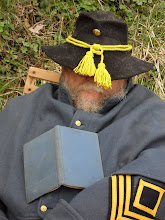
"To name something is to own it." This is an old idea from the beginning of time. If you can name something, not only can you describe it, you can possibly control it. This why among people who believe in magic and witchcraft, most have a secret or "spirit" name that is only known to them and a select few.
Naming conventions is something a fiction writer needs to keep in mind when introducing his or her characters to the reader. How people name their children and how those children identify themselves will tell a lot about the culture.
In medieval Europe the rise of family names came from people being known by their occupation, a feature, where they lived ("Miller," "Fuller," "Long," "Short," "Bridges," "London," "Longbottom") or who they were related to ("Watson," "Fitzhugh," "Brothersson [that one I don't think I want to look too closely at]"). As a note, in Iceland four members of a nuclear family can have four different last names such as Rorick Erikson, his wife Feya Jorgansdaughter, and their childern Erik Rorickson and Trondi Roricksdaughter (something that gives an Icelandic phone book a slightly higher page count than War and Peace).
The Romans seemed to have a dearth of names that were fashionable over the millennium their republic and empire lasted. To paraphrase Sam Goldwin, "Every Tom, Dick, and Harry was named Gaius." It seems there were only about eight names used for boys and approximately the same number for girls. This led one barbarian chieftain to remark, "The Romans must be a poor people as they can afford so few names to chose from." With everyone named pretty much the same thing, the Romans had to resort to nicknames and qualifiers such as "the elder/the younger," "Black/florid/tall/short/fat," "The African/Thracian/Iberian," etc (which somewhat puts the lie to "Roman efficiency"). The same sort of thing arose among the men who fought the War Between the States. So many were either named John or something outlandish that, like the Romans, most ended up known more by their nicknames (Ulysses Simpson Grant and John Bell Hood were "Sam" as an example) or used their middle name (William Dorsey Pender was known to his contemporaries and history usually just as Dorsey Pender--one of the uncles on my father's side and our cat of the moment were named "Dorsey" for him). In the movie "Zulu," the fact so many Welshmen were named William Jones is highlighted in the practice in Welsh regiments of using a portion of their service number as a qualifier ("2451 Jones" or "Jones 6325"). We ran into something like this in a medievalist group I belonged to. We had three "Roricks," "Rorick Rorickson," "Rorick the Long," and the luckiest of all, "Rorick Joanna's Husband."
Another name use convention I've found notably within three groups is the first two initials used rather than first and second name. Quite often when you run across such, there is a fair chance that the person (male usually) is either a Russian, an Indian (from the subcontinent rather than Amerindian), or worked for the Norfolk and Western Railway.
If you write crime, keep in mind dang near everybody on the street goes by a nickname. Part of this just a natural human affinity for such and part is because there are a lot of dudes out there you just don't want to know your real name. There's also the "AKA" factor (Also Known As). Multiple aliases are the norm (without such, police files that take up three floors could probably be kept in one file cabinet with a drawer left over for munchies and another for girlie magazines). As one cop said, "Everybody on the street's got a name."
There is also the divide between East and West. In eastern Asia, the family name comes first followed by the given names. In my young and more foolish days, this used to trip me up when doing research on that area. As I have to read in translation, whether the family name came first or last (and Lord help me, I even came across one in which it was sandwiched between two given names) seemed totally at the whim of an editor in either New York or London. Before I wised up, I wasted time looking for information on Saburo Sakai under what I thought was the family name, "Saburo"--which is kind of like trying to look up James Longstreet under "Jimmy (by the way, he went by "Pete")."
For the writer, naming characters gives you a certain power. The name can describe their inner person (Dickens' name picks immediately pops to mind), make them ridiculous ("Major Minor," "Private Means,"), show how life treats them (Joseph Heller's "Major Major Major"), or you can honor someone (my naming of spacecraft such as the survey vessel Alfred L. Wegener or the "Hero" class destroyers Kevin Barry and Todd Beamer). The guys in England who translated Rene Goscinny and Albert Uderzo's French comic "Asterix the Gaul" had a field day with this with folks like the Roman commander, Cumulus Nimbus, the over weight Goth, Hemispheric, the Greek Mercenary, Neverataloss, and the confused Egyptian vacationer, Ptennisnet (personally, I think the Druid's name "Readymix" in the American translation used during the comic's short run in U.S. newspapers was funnier than the Brit "Getafix"). I've noticed that Karina Fabian's elves in her Dragoneye, P.I. series have the same lamentable taste in names as Neverataloss' parents.
One thing a writer should probably have little fear of is coming up with a name that nobody would give their kid. Looking at some names will convince you that either all their taste was in their mouth or they must have hated their offspring. I remember a lady who had to go through life as Rose Thorn--naturally, she married a guy named Bush.
3 February 2010: Feast of St. Liafdag of Jutland. Spain recognizes U.S. 1783, Meiji Emperor enthroned - Tokyo 1867, Earthquake - Hawke's Bay, New Zealand 1931, U.S. Marines and Army capture Kwajalein 1944.
Showing posts with label War Between the States. Show all posts
Showing posts with label War Between the States. Show all posts

"Gentlemen, it is to be war."
Main battles picked for 150th anniversary observance of the War Between the States/American Civil War.
A mite late for Lee-Jackson Day, but the American Civil War re-enactor groups' leaders have decided which battle re-enactments will be endorsed. Meeting in Chickamauga, Georgia, members of the Civil War 150th National Leadership Convention representing 12,000 re-enactors voted for the following battle observances:
2011
First Manassas/Bull Run -- Virginia
Shiloh -- Tennessee
2012
Second Manassas/Bull Run -- Virginia
Vicksburg -- Mississippi
2013
Gettysburg -- Pennsylvania
Chickamauga -- Georgia
2014
The Wilderness -- Virginia
Atlanta -- Georgia
2015
Bentonville -- North Carolina
Appomattox Court House -- Virginia
I used to take part in re-enacting back when I could move around better. I was a private in a Virginia Volunteer Infantry company or a Pennsylvania Volunteer Infantry company (depending on which side was needed more--Federals outnumbered four to one by Confederates is just silly). After a while, I got old and tired and my case of Civil War bloat was just too embarrassing [see note]. Now adays, on those rare occasions I can get outside to attend a re-enactment, I stand on the sidelines with the other gawkers and dream. If I can manage it, I plan to see the sesquicentennial through as I did the centennial, though I admit the bicentennial might possibly be a bit of a stretch.
Note: Civil War Bloat.
Civil War bloat is a condition in which the re-enactor appears to has been dead in the sun for three days during the hot summer of 1863 while still standing up. It is brought on by age, a lack of regular exercise, and a wife who is far too good a cook. It is especially weird looking when the affected soldier is dressed in gray or butternut (putting the lie to the hard times in the South). The overly common amount of gray hair (if any) that often accompanies it also calls into question the fact that the men on both sides normally ranged in age from 16 to 35. This condition effects not only Civil War re-enactors, but those of many other periods. I've noted it at Alesia, Waterloo, Rorke's Drift, the Somme, and Normandy. The problem is old guys are the ones who have the bucks to shell out $600 for their wool trousseau (uniform, equipment, and rifle musket) and the time to burn on summer weekends out in the middle of nowhere (the young guys seem rather more intent on chasing girls for some reason).
Occasionally though, one does run across a unit of young, dirty, sweaty, ragged, skinny men in gray or blue and one realizes he is looking at his own great-great grandfather.
22 January 2010: Feast of St. Brithward of Ramsbury. Ashantis defeat British on Gold Coast 1824, Battles of Isandlwana and Rorke's Drift 1879, Commonwealth forces capture Tobruk from Italians 1941, Anzio landings 1944.
A mite late for Lee-Jackson Day, but the American Civil War re-enactor groups' leaders have decided which battle re-enactments will be endorsed. Meeting in Chickamauga, Georgia, members of the Civil War 150th National Leadership Convention representing 12,000 re-enactors voted for the following battle observances:
2011
First Manassas/Bull Run -- Virginia
Shiloh -- Tennessee
2012
Second Manassas/Bull Run -- Virginia
Vicksburg -- Mississippi
2013
Gettysburg -- Pennsylvania
Chickamauga -- Georgia
2014
The Wilderness -- Virginia
Atlanta -- Georgia
2015
Bentonville -- North Carolina
Appomattox Court House -- Virginia
I used to take part in re-enacting back when I could move around better. I was a private in a Virginia Volunteer Infantry company or a Pennsylvania Volunteer Infantry company (depending on which side was needed more--Federals outnumbered four to one by Confederates is just silly). After a while, I got old and tired and my case of Civil War bloat was just too embarrassing [see note]. Now adays, on those rare occasions I can get outside to attend a re-enactment, I stand on the sidelines with the other gawkers and dream. If I can manage it, I plan to see the sesquicentennial through as I did the centennial, though I admit the bicentennial might possibly be a bit of a stretch.
Note: Civil War Bloat.
Civil War bloat is a condition in which the re-enactor appears to has been dead in the sun for three days during the hot summer of 1863 while still standing up. It is brought on by age, a lack of regular exercise, and a wife who is far too good a cook. It is especially weird looking when the affected soldier is dressed in gray or butternut (putting the lie to the hard times in the South). The overly common amount of gray hair (if any) that often accompanies it also calls into question the fact that the men on both sides normally ranged in age from 16 to 35. This condition effects not only Civil War re-enactors, but those of many other periods. I've noted it at Alesia, Waterloo, Rorke's Drift, the Somme, and Normandy. The problem is old guys are the ones who have the bucks to shell out $600 for their wool trousseau (uniform, equipment, and rifle musket) and the time to burn on summer weekends out in the middle of nowhere (the young guys seem rather more intent on chasing girls for some reason).
Occasionally though, one does run across a unit of young, dirty, sweaty, ragged, skinny men in gray or blue and one realizes he is looking at his own great-great grandfather.
22 January 2010: Feast of St. Brithward of Ramsbury. Ashantis defeat British on Gold Coast 1824, Battles of Isandlwana and Rorke's Drift 1879, Commonwealth forces capture Tobruk from Italians 1941, Anzio landings 1944.
Of Women, Bucks, and Why They Ain't Got 'Em.
I'm pretty much a guy (quick look down). Yeah, a guy. But I have been known to associate with women (two are asleep a few meters away as I write this). Over the years, I've come to the opinion that they are heavily taken advantage of in this society. Reading an article at oh-dark-thirty this morning reminded me of this (not to mention getting my skivies in a knot). Here's the article: http://articles.moneycentral.msn.com/SavingandDebt/ConsumerActionGuide/dunleavey-why-it-costs-more-to-be-a-woman.aspx
Since I've been married (34 years and counting) I've noticed that women are sold poorly made clothing for much more than well made men's clothing. The coats are thinner, the pants start unraveling on the first wearing, and the socks have toes coming through them before the mates vanish in the dyer. One reason women are always cold--I had a scientific treatise about this on the blog sometime ago you may remember--is that their winter clothes are apparently made of cheese cloth or, at least, cheesy cloth. The only companies I've run across that seem to consistently sell clothing for women to wear outside in temperate and frigid areas at anytime other than summer are Cabela's http://www.cabelas.com and L.L.Bean http://www.llbean.com . The prices are generally no worse than the mall and the quality is a heck of a lot better.
Why does this sort of thing go on? Because women put up with it. Women rarely make a stink about how they're taken advantage of. Yeah, there's some griping to each other, but nothing really gets done other than a bit of venting. The people who make a living out of being women professionally seem to spend a large part of their time pursuing grants and agitating for various amorphous "rights" but never seem to address the fact it costs a woman 50% more to live than a man. Occasionally, one will hear them complain about women being paid 80% what guys are for doing the same jobs (the fastest way to lower payroll costs in any profession is to attract women to it). Okay, but let's hear more about women's other economic problems as well.
I don't think much of anything will change until women vote with their pocketbooks. As long as producers can mold a razor in pink plastic and know they can sell it for 50% more, nothing's going to happen. When women start buying the same razor in white, blue, or even Advantage HD camouflage (which, by the way, is rather fetching), the producer will get the message. As an example, the ladies in my life shop in the Men's department for those things that don't require frilliness: socks, t-shirts, long johns, backpacks, even some of their shoes. Does it make them any less feminine? Nope, just shows them to be women who are too smart to pay more for the sake of their gender. Me? I likes my women smart.
Review: (Note to FTC: I bought this dang book myself!)
Lee's Lieutenants: A Study in Command. Douglas Southall Freeman. Abridged in one volume by Stephen W. Sears. New York: Simon & Schuster, 1998. Kindle.
As a general rule, when confronted with an abridgement, I retreat precipitously (yeah, okay, I admit it does usually look more like a rout). Due to a malfunction of my port side manipulator, I'm forced to read on my Kindle as I'm unable to hold a book until I get out of drydock. I felt like reading something on the War Between the States (American Civil War to you folks of a Northern persuasion), but had already read James M. McPherson's book on Sharpsburg, Crossroads of Freedom: Antietam, and didn't have the bucks to download Edward Longacre's biography of the Federal cavalry commander who sparked Gettysburg and saved the Union, General John Buford: A Military Biography. I had downloaded Sears' abridgement of Freeman's three volume work published in 1942, '43, and '44 last summer at the same time I downloaded an abridgement of Freeman's four volume Pulitzer Prize winning R.E. Lee, and had never gotten around to looking at it.
Okay, I admit it. I own the three volume set and to be honest, I haven't been able to really tell the difference between the two other than (I think) Sears has kept most of the actual matter on command and dumped some of the biographical detail, necessary redundancies connecting volumes, and notes. He has kept enough of the biographies to give a good idea of the Army of Northern Virginia's general officers. He hasn't touched Freeman's voice or style and hasn't attempted to update him--for which I have warm, fuzzy feelings for Mr. Sears.
James M. McPherson is at his usual best in his Introduction.
Freeman is always a pleasure to read and Stephen W. Sears did a heck of a job lightening Lee's Lieutenants without cutting either bone or muscle.
Note: Amazon.com's free Kindle for PC download is a big help. When I tire of holding the Kindle, it allows me to read any of my Kindle formatted books (including those from Baen and ManyBooks.net) sitting at the laptop or desktop.
8 January 2010: Feast of St. Thorfinn of Trondhjem, Ethelred of Wessex defeats Danes 871, Charles Stuart takes Stirling 1746, Battle of New Orleans 1815, Crazy Horse and Two Moons defeated at Wolf Mountain by Nelson A. Miles 1877.
Since I've been married (34 years and counting) I've noticed that women are sold poorly made clothing for much more than well made men's clothing. The coats are thinner, the pants start unraveling on the first wearing, and the socks have toes coming through them before the mates vanish in the dyer. One reason women are always cold--I had a scientific treatise about this on the blog sometime ago you may remember--is that their winter clothes are apparently made of cheese cloth or, at least, cheesy cloth. The only companies I've run across that seem to consistently sell clothing for women to wear outside in temperate and frigid areas at anytime other than summer are Cabela's http://www.cabelas.com and L.L.Bean http://www.llbean.com . The prices are generally no worse than the mall and the quality is a heck of a lot better.
Why does this sort of thing go on? Because women put up with it. Women rarely make a stink about how they're taken advantage of. Yeah, there's some griping to each other, but nothing really gets done other than a bit of venting. The people who make a living out of being women professionally seem to spend a large part of their time pursuing grants and agitating for various amorphous "rights" but never seem to address the fact it costs a woman 50% more to live than a man. Occasionally, one will hear them complain about women being paid 80% what guys are for doing the same jobs (the fastest way to lower payroll costs in any profession is to attract women to it). Okay, but let's hear more about women's other economic problems as well.
I don't think much of anything will change until women vote with their pocketbooks. As long as producers can mold a razor in pink plastic and know they can sell it for 50% more, nothing's going to happen. When women start buying the same razor in white, blue, or even Advantage HD camouflage (which, by the way, is rather fetching), the producer will get the message. As an example, the ladies in my life shop in the Men's department for those things that don't require frilliness: socks, t-shirts, long johns, backpacks, even some of their shoes. Does it make them any less feminine? Nope, just shows them to be women who are too smart to pay more for the sake of their gender. Me? I likes my women smart.
Review: (Note to FTC: I bought this dang book myself!)
Lee's Lieutenants: A Study in Command. Douglas Southall Freeman. Abridged in one volume by Stephen W. Sears. New York: Simon & Schuster, 1998. Kindle.
As a general rule, when confronted with an abridgement, I retreat precipitously (yeah, okay, I admit it does usually look more like a rout). Due to a malfunction of my port side manipulator, I'm forced to read on my Kindle as I'm unable to hold a book until I get out of drydock. I felt like reading something on the War Between the States (American Civil War to you folks of a Northern persuasion), but had already read James M. McPherson's book on Sharpsburg, Crossroads of Freedom: Antietam, and didn't have the bucks to download Edward Longacre's biography of the Federal cavalry commander who sparked Gettysburg and saved the Union, General John Buford: A Military Biography. I had downloaded Sears' abridgement of Freeman's three volume work published in 1942, '43, and '44 last summer at the same time I downloaded an abridgement of Freeman's four volume Pulitzer Prize winning R.E. Lee, and had never gotten around to looking at it.
Okay, I admit it. I own the three volume set and to be honest, I haven't been able to really tell the difference between the two other than (I think) Sears has kept most of the actual matter on command and dumped some of the biographical detail, necessary redundancies connecting volumes, and notes. He has kept enough of the biographies to give a good idea of the Army of Northern Virginia's general officers. He hasn't touched Freeman's voice or style and hasn't attempted to update him--for which I have warm, fuzzy feelings for Mr. Sears.
James M. McPherson is at his usual best in his Introduction.
Freeman is always a pleasure to read and Stephen W. Sears did a heck of a job lightening Lee's Lieutenants without cutting either bone or muscle.
Note: Amazon.com's free Kindle for PC download is a big help. When I tire of holding the Kindle, it allows me to read any of my Kindle formatted books (including those from Baen and ManyBooks.net) sitting at the laptop or desktop.
8 January 2010: Feast of St. Thorfinn of Trondhjem, Ethelred of Wessex defeats Danes 871, Charles Stuart takes Stirling 1746, Battle of New Orleans 1815, Crazy Horse and Two Moons defeated at Wolf Mountain by Nelson A. Miles 1877.
Subscribe to:
Posts (Atom)