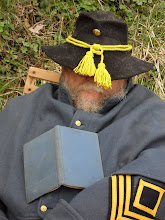
"To name something is to own it." This is an old idea from the beginning of time. If you can name something, not only can you describe it, you can possibly control it. This why among people who believe in magic and witchcraft, most have a secret or "spirit" name that is only known to them and a select few.
Naming conventions is something a fiction writer needs to keep in mind when introducing his or her characters to the reader. How people name their children and how those children identify themselves will tell a lot about the culture.
In medieval Europe the rise of family names came from people being known by their occupation, a feature, where they lived ("Miller," "Fuller," "Long," "Short," "Bridges," "London," "Longbottom") or who they were related to ("Watson," "Fitzhugh," "Brothersson [that one I don't think I want to look too closely at]"). As a note, in Iceland four members of a nuclear family can have four different last names such as Rorick Erikson, his wife Feya Jorgansdaughter, and their childern Erik Rorickson and Trondi Roricksdaughter (something that gives an Icelandic phone book a slightly higher page count than War and Peace).
The Romans seemed to have a dearth of names that were fashionable over the millennium their republic and empire lasted. To paraphrase Sam Goldwin, "Every Tom, Dick, and Harry was named Gaius." It seems there were only about eight names used for boys and approximately the same number for girls. This led one barbarian chieftain to remark, "The Romans must be a poor people as they can afford so few names to chose from." With everyone named pretty much the same thing, the Romans had to resort to nicknames and qualifiers such as "the elder/the younger," "Black/florid/tall/short/fat," "The African/Thracian/Iberian," etc (which somewhat puts the lie to "Roman efficiency"). The same sort of thing arose among the men who fought the War Between the States. So many were either named John or something outlandish that, like the Romans, most ended up known more by their nicknames (Ulysses Simpson Grant and John Bell Hood were "Sam" as an example) or used their middle name (William Dorsey Pender was known to his contemporaries and history usually just as Dorsey Pender--one of the uncles on my father's side and our cat of the moment were named "Dorsey" for him). In the movie "Zulu," the fact so many Welshmen were named William Jones is highlighted in the practice in Welsh regiments of using a portion of their service number as a qualifier ("2451 Jones" or "Jones 6325"). We ran into something like this in a medievalist group I belonged to. We had three "Roricks," "Rorick Rorickson," "Rorick the Long," and the luckiest of all, "Rorick Joanna's Husband."
Another name use convention I've found notably within three groups is the first two initials used rather than first and second name. Quite often when you run across such, there is a fair chance that the person (male usually) is either a Russian, an Indian (from the subcontinent rather than Amerindian), or worked for the Norfolk and Western Railway.
If you write crime, keep in mind dang near everybody on the street goes by a nickname. Part of this just a natural human affinity for such and part is because there are a lot of dudes out there you just don't want to know your real name. There's also the "AKA" factor (Also Known As). Multiple aliases are the norm (without such, police files that take up three floors could probably be kept in one file cabinet with a drawer left over for munchies and another for girlie magazines). As one cop said, "Everybody on the street's got a name."
There is also the divide between East and West. In eastern Asia, the family name comes first followed by the given names. In my young and more foolish days, this used to trip me up when doing research on that area. As I have to read in translation, whether the family name came first or last (and Lord help me, I even came across one in which it was sandwiched between two given names) seemed totally at the whim of an editor in either New York or London. Before I wised up, I wasted time looking for information on Saburo Sakai under what I thought was the family name, "Saburo"--which is kind of like trying to look up James Longstreet under "Jimmy (by the way, he went by "Pete")."
For the writer, naming characters gives you a certain power. The name can describe their inner person (Dickens' name picks immediately pops to mind), make them ridiculous ("Major Minor," "Private Means,"), show how life treats them (Joseph Heller's "Major Major Major"), or you can honor someone (my naming of spacecraft such as the survey vessel Alfred L. Wegener or the "Hero" class destroyers Kevin Barry and Todd Beamer). The guys in England who translated Rene Goscinny and Albert Uderzo's French comic "Asterix the Gaul" had a field day with this with folks like the Roman commander, Cumulus Nimbus, the over weight Goth, Hemispheric, the Greek Mercenary, Neverataloss, and the confused Egyptian vacationer, Ptennisnet (personally, I think the Druid's name "Readymix" in the American translation used during the comic's short run in U.S. newspapers was funnier than the Brit "Getafix"). I've noticed that Karina Fabian's elves in her Dragoneye, P.I. series have the same lamentable taste in names as Neverataloss' parents.
One thing a writer should probably have little fear of is coming up with a name that nobody would give their kid. Looking at some names will convince you that either all their taste was in their mouth or they must have hated their offspring. I remember a lady who had to go through life as Rose Thorn--naturally, she married a guy named Bush.
3 February 2010: Feast of St. Liafdag of Jutland. Spain recognizes U.S. 1783, Meiji Emperor enthroned - Tokyo 1867, Earthquake - Hawke's Bay, New Zealand 1931, U.S. Marines and Army capture Kwajalein 1944.
Showing posts with label Roman Empire. Show all posts
Showing posts with label Roman Empire. Show all posts

The Joy of Archetypes.
The other day, my first born IMed me a URL from her computer downstairs. Nothing out of the ordinary there. I clicked on it and found myself looking at me. Well, a pen and ink version of me anyway. Same "birth control" glasses, beard, pocket full of pencils, pot belly, unfashionable clothes, and bemused look (okay, in my case it's more of a thousand mile stare). It seems this is a portrait of the archetypical strategy gamer from an online gamers' comic.
It's interesting; I never thought of myself matching an archetype. I always figured the Lord took one look at me, broke the mold, burnt the blueprints, and blew up the factory.
Archetypes are a part of writing in which something, a personality for instance, stands as a symbol for all such personalities having the same features. Psychiatrist Carl Jung described the idea of archetypes but mythologist Joseph Campbell popularized them with his description of the "Hero's Journey" in The Hero with a Thousand Faces. Story tellers have used archetypes as long as there have been stories. Humans are apparently hard-wired to recognize archetypes. Aesop's tortoise and hare are archetypes. Plautus' stock characters, Pseudolus, Senex, and Miles Gloriosus [see "A Funny Thing Happened on the Way to the Forum" below] are archetypes. John Ford and John Wayne dealt in archetypes. In our own time, Luke, Han, Obi Wan, Varder, in fact every character in Star Wars is an archetype that comes from the Hero's Journey, as does the plot of "Star Wars IV: A New Hope" (for my part, The Hero with a Thousand Faces is one the of the few books I'd like seen burned, though only in southern California--with the success of the first Star Wars movie, every hack in Hollywood ran out and bought a copy and writes scripts by just plugging names into the Hero's Journey and mixing and matching time periods and genres).
Archetypes can be used as a form of literary short hand, though best with restraint. When every general is crazed with blood lust, every politician is venal, every holy man is either a saint or the devil incarnate, or every member of a minority is the salt of the earth, archetypes become a cracked crutch for lousy writing.
For those of us who attempt to write humor though, archetypes can be a gift. When the audience detects an archetype they are predisposed to expect certain characteristics. This allows the writer to set them up for the gag and then jerk the rug out from under them. That the evil galactic overlord (is there any other kind?) wants kittens on his new charge card is what makes the commercial memorable. If you do it right, the audience gets a slight case of mental whiplash. Vaudevillians from Plautus to Eddy Foy to Monty Python have made a living off of this for a couple of thousand years.
Like most good workmen, writers need to learn to use these tools in the right situations. That way, there are fewer barked knuckles around the keyboard.
Review: (Note to FTC: I bought this dang DVD myself!)
A Funny Thing Happened on the Way to the Forum. MGM. 1 hour 37 minutes.
This is one of my guilty pleasures (like Larry the Cable Guy until he runs me out of the room). As Zero Mostel sings at the opening of Stephen Sondheim's take on Plautus, "Something appealing. Something appalling. Something for everyone...a comedy tonight!"
"A Funny Thing" is an updating of two of Plautus' better plays, "Pseudolus" and "Miles Gloriosus." Zero Mostel plays the part of Pseudolus, slave in the household of Senex and his lovely wife, Dominia (I had to write that, she had a dagger at my throat), residents of "a less fashionable suburb of Rome." Pseudolus can best be described by eavesdropping on a tavern converstation between procurer Marcus Lycus (Phil Silvers) and Crassus (Jon Pertwee),a newly arrived ship's captain:
Lycus: "He did it to me again!"
Captain: "Who?"
Lycus: The dirtiest, conviving-est, lying-est, thieving-est, crookedest, most underhanded slave in all of Rome!"
Captain: "Oh, you mean Pseudolus."
Basically, Pseudolus hatches a plot to gain his freedom that involves Hero (Michael Crawford), the son of Senex, an attempted dirty old man (Michael Hordern), head slave Hysterium (Jack Gilford), Domina (Patricia Jessel), Senex's frightening wife, Philia (Annette Andre), a rather confused virgin and love interest of both father and son, Erronius (Buster Keaton in his last role) as the dim-visioned slightly punch-drunk retired gladiator next door, Marcus Lycus and his emporium on the other side, and a legion led by Miles Gloriosus (Leon Greene), the man who raped Thrace thrice.
The movie is the epitome of low comedy with its one-liners, double ententes, pratfalls, misdirection, puns, and chases. From this, you might, maybe get the feeling I like it.
A Funny Thing Happened on the Way to the Forum is rated A-III (adults) by the U.S. Conference of Catholic Bishops: http://www.usccb.org/
15 January 2010: Feast of St. Ceolwulf of Lindisfame, Nebuchadnezzar II besieges Jerusalem 588 BC, Britsh Museum opens 1759, 21 killed in Boston Molasses Disaster 1919, Pentagon dedicated 1943.
It's interesting; I never thought of myself matching an archetype. I always figured the Lord took one look at me, broke the mold, burnt the blueprints, and blew up the factory.
Archetypes are a part of writing in which something, a personality for instance, stands as a symbol for all such personalities having the same features. Psychiatrist Carl Jung described the idea of archetypes but mythologist Joseph Campbell popularized them with his description of the "Hero's Journey" in The Hero with a Thousand Faces. Story tellers have used archetypes as long as there have been stories. Humans are apparently hard-wired to recognize archetypes. Aesop's tortoise and hare are archetypes. Plautus' stock characters, Pseudolus, Senex, and Miles Gloriosus [see "A Funny Thing Happened on the Way to the Forum" below] are archetypes. John Ford and John Wayne dealt in archetypes. In our own time, Luke, Han, Obi Wan, Varder, in fact every character in Star Wars is an archetype that comes from the Hero's Journey, as does the plot of "Star Wars IV: A New Hope" (for my part, The Hero with a Thousand Faces is one the of the few books I'd like seen burned, though only in southern California--with the success of the first Star Wars movie, every hack in Hollywood ran out and bought a copy and writes scripts by just plugging names into the Hero's Journey and mixing and matching time periods and genres).
Archetypes can be used as a form of literary short hand, though best with restraint. When every general is crazed with blood lust, every politician is venal, every holy man is either a saint or the devil incarnate, or every member of a minority is the salt of the earth, archetypes become a cracked crutch for lousy writing.
For those of us who attempt to write humor though, archetypes can be a gift. When the audience detects an archetype they are predisposed to expect certain characteristics. This allows the writer to set them up for the gag and then jerk the rug out from under them. That the evil galactic overlord (is there any other kind?) wants kittens on his new charge card is what makes the commercial memorable. If you do it right, the audience gets a slight case of mental whiplash. Vaudevillians from Plautus to Eddy Foy to Monty Python have made a living off of this for a couple of thousand years.
Like most good workmen, writers need to learn to use these tools in the right situations. That way, there are fewer barked knuckles around the keyboard.
Review: (Note to FTC: I bought this dang DVD myself!)
A Funny Thing Happened on the Way to the Forum. MGM. 1 hour 37 minutes.
This is one of my guilty pleasures (like Larry the Cable Guy until he runs me out of the room). As Zero Mostel sings at the opening of Stephen Sondheim's take on Plautus, "Something appealing. Something appalling. Something for everyone...a comedy tonight!"
"A Funny Thing" is an updating of two of Plautus' better plays, "Pseudolus" and "Miles Gloriosus." Zero Mostel plays the part of Pseudolus, slave in the household of Senex and his lovely wife, Dominia (I had to write that, she had a dagger at my throat), residents of "a less fashionable suburb of Rome." Pseudolus can best be described by eavesdropping on a tavern converstation between procurer Marcus Lycus (Phil Silvers) and Crassus (Jon Pertwee),a newly arrived ship's captain:
Lycus: "He did it to me again!"
Captain: "Who?"
Lycus: The dirtiest, conviving-est, lying-est, thieving-est, crookedest, most underhanded slave in all of Rome!"
Captain: "Oh, you mean Pseudolus."
Basically, Pseudolus hatches a plot to gain his freedom that involves Hero (Michael Crawford), the son of Senex, an attempted dirty old man (Michael Hordern), head slave Hysterium (Jack Gilford), Domina (Patricia Jessel), Senex's frightening wife, Philia (Annette Andre), a rather confused virgin and love interest of both father and son, Erronius (Buster Keaton in his last role) as the dim-visioned slightly punch-drunk retired gladiator next door, Marcus Lycus and his emporium on the other side, and a legion led by Miles Gloriosus (Leon Greene), the man who raped Thrace thrice.
The movie is the epitome of low comedy with its one-liners, double ententes, pratfalls, misdirection, puns, and chases. From this, you might, maybe get the feeling I like it.
A Funny Thing Happened on the Way to the Forum is rated A-III (adults) by the U.S. Conference of Catholic Bishops: http://www.usccb.org/
15 January 2010: Feast of St. Ceolwulf of Lindisfame, Nebuchadnezzar II besieges Jerusalem 588 BC, Britsh Museum opens 1759, 21 killed in Boston Molasses Disaster 1919, Pentagon dedicated 1943.
New Year I suppose.
Looking back over the year just past always strikes me kind of like carving notches on your gun for each time you've been shot--you don't necessarily want to be reminded. Like Satchel Page, I think I'd rather look ahead. Of course this is tempered by the suspicion that while hope spring eternal, stupidity is forever.
The placement of New Years, at least in the West, is counterintuitive. Instead of walking out into the warmth and light of the new year the morning of 1 January, the door opens, a blast of cold air rolls in followed by the four horsemen in the shape of ice, snow, rain, and wet cats. Wouldn't it make a heck of a lot more sense to kick the year off on, say, Easter morning? It's sunny, warm, baseball season isn't that far away, and, best of all, there are bunnies! You got to admit as an opening sequence, Jesus' rising from the dead comes pretty close to equaling that of Star Wars IV: A New Hope.
I realize that our present New Years comes from the Romans. Their god Janus ushered it in looking both forward and backward. Now I ask you, would you really trust someone so two-faced? That was one of attractions of the Christians' God--he didn't kid you.
Moving New Years to the spring could even be seen as trying to meet the government halfway. After all, theirs starts 1 July.
Over the Fence
Speaking of baseball, from time to time, I'm going to include short pieces from Homer Smute, who bills himself as the world's oldest minor league baseball player. He lives in Virginia and plays Short Stop for the Fox Run Stump Busters in the Blue Ridge League (not to be confused with the two leagues that disbanded in 1930 and 1950).
Homer is one of the few people I know these days who communicate by letter. He has a child-like faith that if he addresses it correctly, puts a stamp on it, and puts the flag up on his mailbox, the U.S. Postal Service will safely deliver it to my door (so far, he seems to be right).
I figure the more he writes, the less I have to.
Homer:
I remember my greeting from the Busters' manager, Bill Hoarwell, the first day I showed up. When the manager's first words to you are, "Don't unpack your bags," it ain't a good feeling.
Looking at major league scores (2-1, 1-0, 4-2) and minor league scores (8-0, 16-12, 14-2), consistency is not necessarily a minor league virtue.
Around the Busters, you don't tend to hear the same things you do around the majors when the subject of money comes up:
"Much much will I sign for? That depends."
"On what?"
"Whether the rehab works and what happens with the lawsuits. Drugs and alimony, palimony, and child support ain't cheap."
Oh for the problems of the majors.
Watching baseball on TV, I think I've got to the point where I prefer to watch a game between mid-level teams. There's no real pressure or players strutting around convinced of their value as deities (despite the fact many are complete losses as people) and you can settle in just for the game.
"Washington: first in war, first in peace, last in the American League." Well, the league changed anyway.
Fellow down in the Valley said he'd put our play-by-play online for us if we'd call it in to him during the game. But we couldn't get passed Miz Friddly and Miz Deal on the party-line.
Looking back over my record so far, the fact that my daddy named me "Homer" shows the perversity of the man. Him with second sight and all.
Catholic Writers Conference Online Provides Practical Help
World Wide Web--This year's Catholic Writers' Conference Online, which will be held February 26-March 5, 2010, will focus on the practical things the writer needs to succeed.
The conference is held via chats and forums at http://www.catholicwritersconference.com. Sponsored by the Catholic Writers' Guild, the online conference is free of charge and open to writers of all levels who register between October 1, 2009 and February 15, 2010.
"We've always concentrated on workshops and chats that teach the writer skills or provide information in the areas of crafting, publishing and marketing their works, but this year, we're adding critique workshops and some incredible opportunities to pitch to leading publishers," said organizer Karina Fabian.
This year, publishers hearing pitches include well known Catholic publishers like Pauline, large publishers like Thomas Nelson, and smaller presses like White Rose. Thus far, eleven pitch sessions are scheduled, running the gamut from Christian romance to Catholic theology.
In a new program, at least fifty attendees will have the opportunity to have pieces of their work critiqued by successful editors and writers. In addition, there will be forum-based workshops and chat room presentations covering topics from dialogue to freelancing to how Catholic fiction differs from Christian fiction.
"Even in good economic times, it's hard for writers to attend live conferences," said Fabian, "but this year, we think it's even more important to help careers by utilizing an online format. We're so grateful that our presenters are willing to share their time and talent."
Early registration is recommended. Although the conference is offered free of charge, donations are accepted; proceeds will go toward future conferences. Non-Catholics may attend, as long as they respect Catholic beliefs and the conference's Catholic focus.
To register or for more information, go to http://www.catholicwritersconference.com.
1 January 2010: Solemnity of Mary-Mother of God, Emancipation Proclamation takes effect in Confederate territory (though not in Federal) 1863, Ellis Island opens 1892, "Law for the Prevention of Genetically Diseased Offspring"- Germany 1934, Navy SEALs established 1962.
The placement of New Years, at least in the West, is counterintuitive. Instead of walking out into the warmth and light of the new year the morning of 1 January, the door opens, a blast of cold air rolls in followed by the four horsemen in the shape of ice, snow, rain, and wet cats. Wouldn't it make a heck of a lot more sense to kick the year off on, say, Easter morning? It's sunny, warm, baseball season isn't that far away, and, best of all, there are bunnies! You got to admit as an opening sequence, Jesus' rising from the dead comes pretty close to equaling that of Star Wars IV: A New Hope.
I realize that our present New Years comes from the Romans. Their god Janus ushered it in looking both forward and backward. Now I ask you, would you really trust someone so two-faced? That was one of attractions of the Christians' God--he didn't kid you.
Moving New Years to the spring could even be seen as trying to meet the government halfway. After all, theirs starts 1 July.
Over the Fence
Speaking of baseball, from time to time, I'm going to include short pieces from Homer Smute, who bills himself as the world's oldest minor league baseball player. He lives in Virginia and plays Short Stop for the Fox Run Stump Busters in the Blue Ridge League (not to be confused with the two leagues that disbanded in 1930 and 1950).
Homer is one of the few people I know these days who communicate by letter. He has a child-like faith that if he addresses it correctly, puts a stamp on it, and puts the flag up on his mailbox, the U.S. Postal Service will safely deliver it to my door (so far, he seems to be right).
I figure the more he writes, the less I have to.
Homer:
I remember my greeting from the Busters' manager, Bill Hoarwell, the first day I showed up. When the manager's first words to you are, "Don't unpack your bags," it ain't a good feeling.
Looking at major league scores (2-1, 1-0, 4-2) and minor league scores (8-0, 16-12, 14-2), consistency is not necessarily a minor league virtue.
Around the Busters, you don't tend to hear the same things you do around the majors when the subject of money comes up:
"Much much will I sign for? That depends."
"On what?"
"Whether the rehab works and what happens with the lawsuits. Drugs and alimony, palimony, and child support ain't cheap."
Oh for the problems of the majors.
Watching baseball on TV, I think I've got to the point where I prefer to watch a game between mid-level teams. There's no real pressure or players strutting around convinced of their value as deities (despite the fact many are complete losses as people) and you can settle in just for the game.
"Washington: first in war, first in peace, last in the American League." Well, the league changed anyway.
Fellow down in the Valley said he'd put our play-by-play online for us if we'd call it in to him during the game. But we couldn't get passed Miz Friddly and Miz Deal on the party-line.
Looking back over my record so far, the fact that my daddy named me "Homer" shows the perversity of the man. Him with second sight and all.
Catholic Writers Conference Online Provides Practical Help
World Wide Web--This year's Catholic Writers' Conference Online, which will be held February 26-March 5, 2010, will focus on the practical things the writer needs to succeed.
The conference is held via chats and forums at http://www.catholicwritersconference.com. Sponsored by the Catholic Writers' Guild, the online conference is free of charge and open to writers of all levels who register between October 1, 2009 and February 15, 2010.
"We've always concentrated on workshops and chats that teach the writer skills or provide information in the areas of crafting, publishing and marketing their works, but this year, we're adding critique workshops and some incredible opportunities to pitch to leading publishers," said organizer Karina Fabian.
This year, publishers hearing pitches include well known Catholic publishers like Pauline, large publishers like Thomas Nelson, and smaller presses like White Rose. Thus far, eleven pitch sessions are scheduled, running the gamut from Christian romance to Catholic theology.
In a new program, at least fifty attendees will have the opportunity to have pieces of their work critiqued by successful editors and writers. In addition, there will be forum-based workshops and chat room presentations covering topics from dialogue to freelancing to how Catholic fiction differs from Christian fiction.
"Even in good economic times, it's hard for writers to attend live conferences," said Fabian, "but this year, we think it's even more important to help careers by utilizing an online format. We're so grateful that our presenters are willing to share their time and talent."
Early registration is recommended. Although the conference is offered free of charge, donations are accepted; proceeds will go toward future conferences. Non-Catholics may attend, as long as they respect Catholic beliefs and the conference's Catholic focus.
To register or for more information, go to http://www.catholicwritersconference.com.
1 January 2010: Solemnity of Mary-Mother of God, Emancipation Proclamation takes effect in Confederate territory (though not in Federal) 1863, Ellis Island opens 1892, "Law for the Prevention of Genetically Diseased Offspring"- Germany 1934, Navy SEALs established 1962.
Christmas y'all!
It's Christmas Day--not Winter Holiday Day, or Sparkle Season Day, or even Big Bunches Sales Day. No, this is Christmas Day. And I expect folks to wish me a Merry Christmas as I wish others a Happy Chanukah, Happy Solstice, or a Happy Tet on their proper days.
For those of us who profess to follow the Prince of Peace, aka: Jesus, the Son of God, this day commemorates His birth in Bethlehem in the Roman province of Judea somewhere around 4 BC. Doing the counting from the dates given in the New Testament, I get His birthday as falling around March/April. My reaction to this? So what? My math may be off, possibly (but pretty unlikely) a scribe dropped a VII somewhere along the way--decimals being a little uncommon in the Roman Empire except when punishing legionaries--but what the hey? The main point is He got born. That the Church picked the same day as the Saturnalia to celebrate probably drove the Roman officials straight up the wall, leads to the charitable thought: "Couldn't happen to a nicer bunch."
So here we are. We're Christians. we're in your face, and our hands are raised to bless you on this, the birthday of our CO!
Now, Mass is over, the tree is lit, the presents have been exchanged ("Oh, yeah, Honey. An electric earwax melter is just what I was hoping for...just out of curiosity, is the receipt still laying around here somewhere?"), and George C. Scott is scaring the bejabbers out of Bob Cratchit. It's Dr. Pepper time! Oh, alright. Please pass the eggnog, then.
And remember, there are those out there who are cold, hungry, and lonely. If you're really a Christian, do something to make it better.
Signal to Task Force: Formation Foxtrot 4--Engage!
25 December 2009: Christmas Day for Western Church, and I'm not going to get into the stupidities that humans have committed on this day through history. After all, it's Christmas y'all.
For those of us who profess to follow the Prince of Peace, aka: Jesus, the Son of God, this day commemorates His birth in Bethlehem in the Roman province of Judea somewhere around 4 BC. Doing the counting from the dates given in the New Testament, I get His birthday as falling around March/April. My reaction to this? So what? My math may be off, possibly (but pretty unlikely) a scribe dropped a VII somewhere along the way--decimals being a little uncommon in the Roman Empire except when punishing legionaries--but what the hey? The main point is He got born. That the Church picked the same day as the Saturnalia to celebrate probably drove the Roman officials straight up the wall, leads to the charitable thought: "Couldn't happen to a nicer bunch."
So here we are. We're Christians. we're in your face, and our hands are raised to bless you on this, the birthday of our CO!
Now, Mass is over, the tree is lit, the presents have been exchanged ("Oh, yeah, Honey. An electric earwax melter is just what I was hoping for...just out of curiosity, is the receipt still laying around here somewhere?"), and George C. Scott is scaring the bejabbers out of Bob Cratchit. It's Dr. Pepper time! Oh, alright. Please pass the eggnog, then.
And remember, there are those out there who are cold, hungry, and lonely. If you're really a Christian, do something to make it better.
Signal to Task Force: Formation Foxtrot 4--Engage!
25 December 2009: Christmas Day for Western Church, and I'm not going to get into the stupidities that humans have committed on this day through history. After all, it's Christmas y'all.
Subscribe to:
Posts (Atom)